



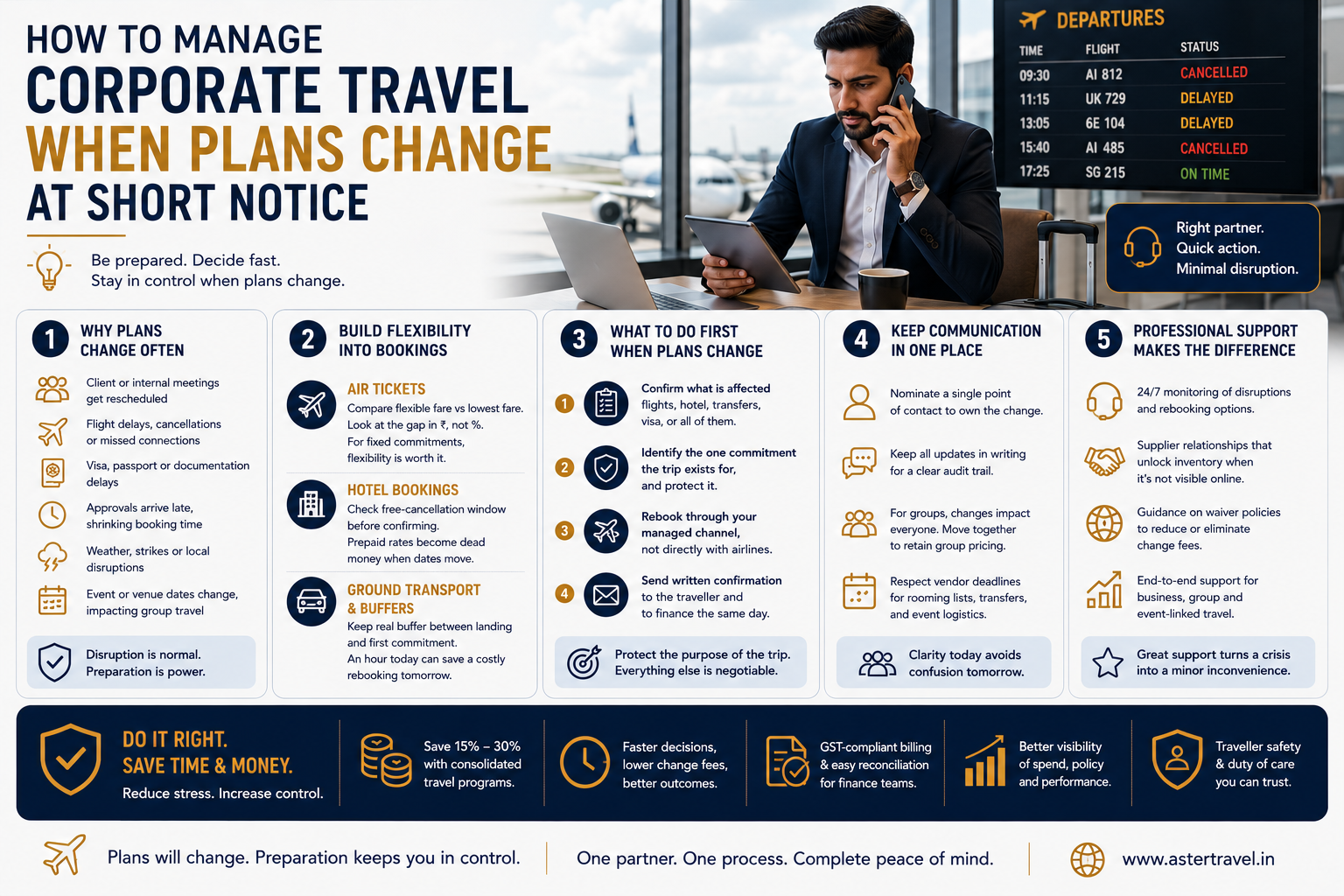
When corporate travel changes land at the last minute, the fastest way to stay in control is to have flexibility already built into the booking, one person authorised to make the call, and a travel partner who can rebook while the disruption is still unfolding. Most of the stress people associate with a cancelled flight or a rescheduled client meeting isn't caused by the change itself. It's caused by decisions made weeks earlier, at the point of booking.
For HR teams, admin leads and executive assistants, this is a recurring headache rather than an occasional one. A client pushes a review by two days, a visa takes longer than expected, and suddenly four confirmed tickets and a hotel block need to move together. As business travel volumes in India keep rising, so does the number of itineraries that need reworking mid-flight.
This blog covers why plans shift so often, what to do first when they do, and how preparation keeps the cost of rebooking under control.
1. Why Corporate Travel Changes Happen More Often Than Teams Expect
Disruption is baked into business travel. Trips are tied to other people's calendars, and those calendars move. Travel managers consistently rank disruption among their biggest operational concerns, and the reasons are rarely dramatic.
The usual triggers look like this:
- Flight delays or cancellations knock out a connection
- Visa, passport or documentation timelines slip
- Internal approvals arrive late, compressing the booking window
- Weather, strikes or local shutdowns affect the destination
- Event or venue dates shift, dragging an entire group booking with them
None of these are unusual. Treating them as emergencies is what makes them expensive.
2. Plan for Corporate Travel Changes Before You Book
Here's the part most teams skip. The real cost of a last-minute change is decided at booking, not at rebooking. A ticket bought purely on lowest fare can cost more to move than the saving was ever worth.
flight_takeoff Air Tickets
Compare the flexible fare against the cheapest one and look at the gap in rupees, not percentages. For a trip anchored to a fixed client date, that difference is usually worth paying.
hotel Hotel Bookings
Check the free-cancellation window before confirming, not after. Prepaid rates look good on a budget sheet and become dead money the moment dates move.
directions_car Ground Transport and Buffers
Leave a real buffer between landing and the first commitment. An hour of slack quietly absorbs a delayed flight and saves a rebooking that would otherwise be unavoidable.
3. What Should You Do First When a Business Trip Changes?
Work out what is fixed and what is negotiable, then protect the fixed thing first. If the meeting is immovable, the flight is the variable. If the flight is gone with no realistic replacement, the meeting becomes the variable and someone needs to say so early.
A workable order of action for most business trip changes:
- Confirm what is affected: flights, hotel, transfers, visa validity, or all four
- Identify the one commitment the trip exists for, and protect it
- Rebook through your managed channel rather than directly with the airline
- Send written confirmation to the traveller and to finance the same day
That third point matters more than it sounds. Booking outside the managed channel during a panic is common, and it's where negotiated rates, spend visibility and policy compliance quietly disappear at once.
4. Keep Communication and Approvals in One Place
Sudden changes usually break down over communication, not logistics. When three people are separately calling the airline, the hotel and the traveller, you get conflicting information and duplicate charges. Nominate a single point of contact who owns the change, and keep the trail in writing so reimbursement questions don't resurface a month later.
Group and MICE bookings need extra care. Change fees are typically applied per passenger, and groups often have to move together to keep group pricing, so one attendee's schedule change can't be solved in isolation. Vendor deadlines for rooming lists and transfers sit well ahead of the event date, which is where most group rebooking pain originates.
5. Where Professional Corporate Travel Support Makes the Difference
An internal team can handle one disrupted trip. Handling five at once, across time zones, while doing their actual jobs, is a different problem. Good corporate travel support means someone is monitoring the disruption, holding supplier relationships that find inventory when public availability is gone, and reaching you before you've noticed the delay yourself. This is where Aster Travel works alongside corporate teams, managing rebooking, transfers, group logistics and event-linked travel end to end.
6. Does Rebooking Always Cost More?
Not always. Fare differences and change fees apply in many cases, but airlines frequently issue waivers during weather events, strikes and mass cancellations, and those windows are easy to miss if nobody is watching for them. A partner tracking waiver announcements can often move a booking at little or no cost, provided the change is made quickly.
Conclusion
Managing corporate travel changes well comes down to three habits: build flexibility into bookings tied to fixed commitments, decide in advance who owns the change, and keep every rebooking inside a single managed channel. Do that consistently and a cancelled flight becomes an inconvenience rather than a crisis, with predictable costs and a clear trail for finance.
The teams that handle disruption best aren't the ones that avoid it. They're the ones that stopped treating it as an exception. Plans will move, sometimes for good reasons and sometimes for none at all, and building your travel process around that assumption is more useful than hoping for a quiet quarter.